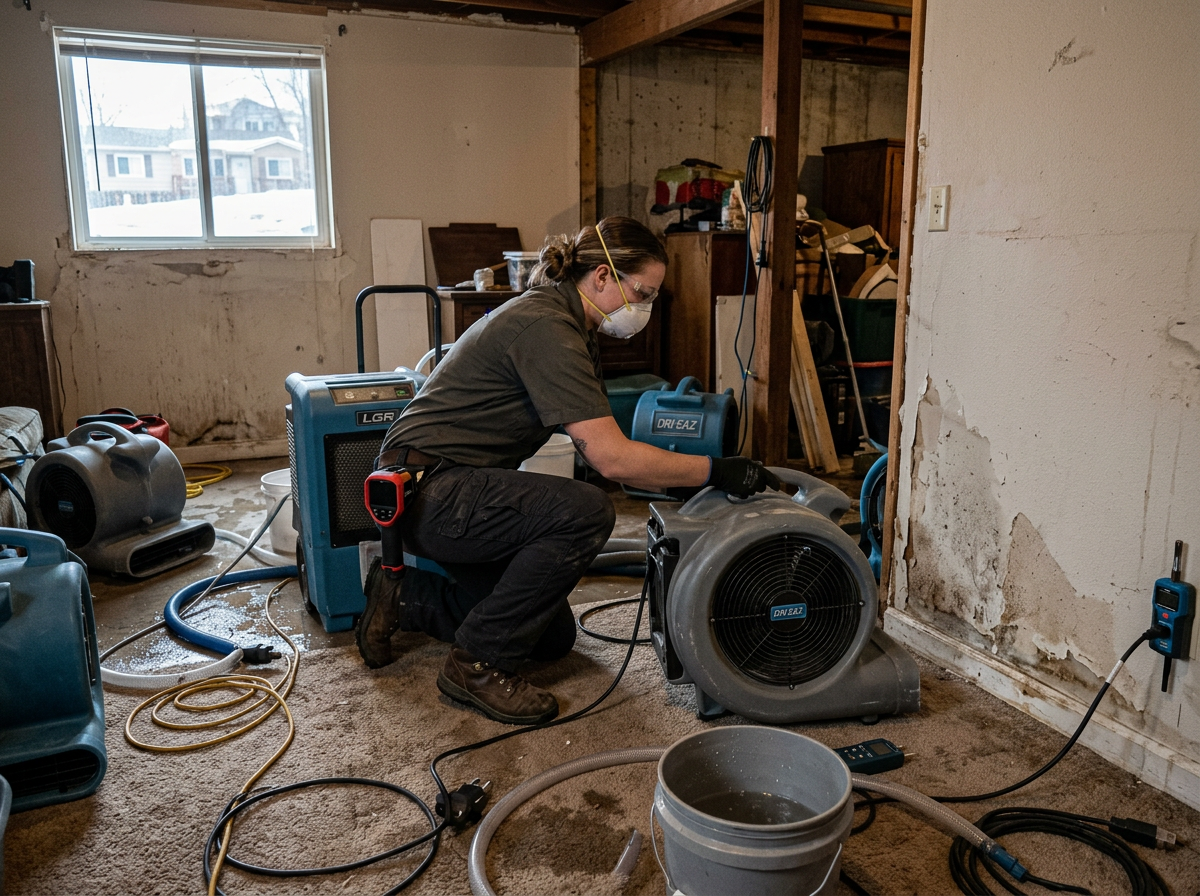
Water damage falls into categories that dictate drying approach. Category 1 clean water from supply lines allows faster salvage of materials, while Category 2 gray water from appliances or Category 3 black water from sewage or flood require full removal of porous items and antimicrobial steps. In Denver's semi-arid air at 5,280 feet, low humidity pulls surface moisture quickly but leaves framing, subfloors and wall cavities damp for days, creating hidden mold risk behind brick bungalow foundations in Capitol Hill or Baker.
Drying starts with extraction using truck-mounted units to pull standing water, followed by placement of air movers, dehumidifiers and directed heat to force evaporation from cavities. Technicians use pin and pinless moisture meters plus thermal imaging to map saturation in real time, targeting under 15 percent moisture content in wood and drywall before equipment removal. Salvageable items like hardwood floors or insulation can often be dried in place when caught early, but saturated carpet pad, drywall below baseboards and any moldy material must be cut out to prevent recurrence.
The mold window closes fast here once surfaces feel dry but cavities remain wet, typically within 48 hours in spring when meltwater enters basements through bentonite clay pressure on older stone foundations. Safety steps include shutting off power in wet areas, using GFCI protection on equipment and ventilating to control airborne particles. Documentation for insurance includes daily moisture logs, before-and-after photos, equipment placement diagrams and a final clearance report showing target readings achieved.
Homeowners in 1950s ranches in Wheat Ridge or Englewood often see damage from frozen pipe bursts that only appears on thaw, while swamp cooler leaks in Highlands homes soak ceilings when float valves fail at startup. Proper drying prevents expansive soil movement that can crack poured walls in newer Parker or Thornton homes when water lingers against foundations.
Technician insight
In Denver, the thing that catches most people out with Structural Drying is how fast drywall feels dry at 5,280 feet while cavities behind brick bungalow walls in Capitol Hill or Baker stay wet for days, especially after spring melt pushes water against foundations without drain tile.
Spring Melt Intrusion in Englewood Ranch
Runoff from still-frozen ground entered a 1960s ranch crawl space through gaps in the foundation. We found saturated insulation and joists with moisture readings above 30 percent. Directed drying equipment and daily monitoring brought levels below 12 percent within five days, allowing salvage of the subfloor without removal.
Structural Drying Services We Offer
✓Wall Cavity Drying
Forced-air drying of interior wall cavities after leaks or bursts to reach insulation and studs before mold forms behind finished surfaces.
✓Subfloor Moisture Removal
Targeted extraction and drying beneath flooring to protect joists and prevent cupping or rot in homes with older crawl spaces.
✓Crawl Space Structural Drying
Dehumidification and airflow in unconditioned crawl spaces common to pre-war bungalows to stop moisture migration into living areas.
✓Basement Foundation Drying
Drying of poured or stone foundation walls after spring melt or clay expansion to reduce structural pressure and hidden saturation.
✓Attic Moisture Extraction
Removal of trapped humidity in attics from roof leaks or poor ventilation to protect rafters and prevent ceiling damage below.
✓Post-Swamp Cooler Drying
Ceiling and attic drying after evaporative cooler float valve or line failures that soak drywall at spring startup or fall shutdown.
Structural Drying Cost in Denver, CO
| Service | Typical Range | What Affects It |
|---|---|---|
| Small Area Drying (under 200 sq ft) | $650–$1,200 | Single wall or floor section; increases with Category 3 water |
| Standard Room Drying | $1,100–$2,400 | Includes wall cavities; higher in older homes with limited access |
| Basement or Crawl Space Drying | $1,800–$4,200 | Depends on size and clay-related foundation exposure |
| Multiple Room or Whole Floor | $2,900–$6,500 | Driven by total square footage and equipment runtime |
Ranges are typical for Denver, CO and confirmed with an exact written quote before any work starts.
How it works
- 1
On-Site Moisture Mapping
Technicians arrive within hours, use meters and imaging to locate all wet materials, and document Category and affected square footage.
- 2
Standing Water Extraction
Truck-mounted pumps remove bulk water from floors and cavities to reduce overall saturation before drying equipment is placed.
- 3
Equipment Setup and Airflow
Air movers, dehumidifiers and cavity-specific tools are positioned for continuous operation with daily adjustments based on readings.
- 4
Monitoring and Clearance
Return visits track moisture decline until targets are met, followed by final verification and removal of all equipment.
- 5
Documentation Handover
Complete logs, photos and clearance report are provided for insurance submission and homeowner records.
Pricing
Pricing depends on affected square footage, water category and access difficulty; we provide an upfront quote after inspection.