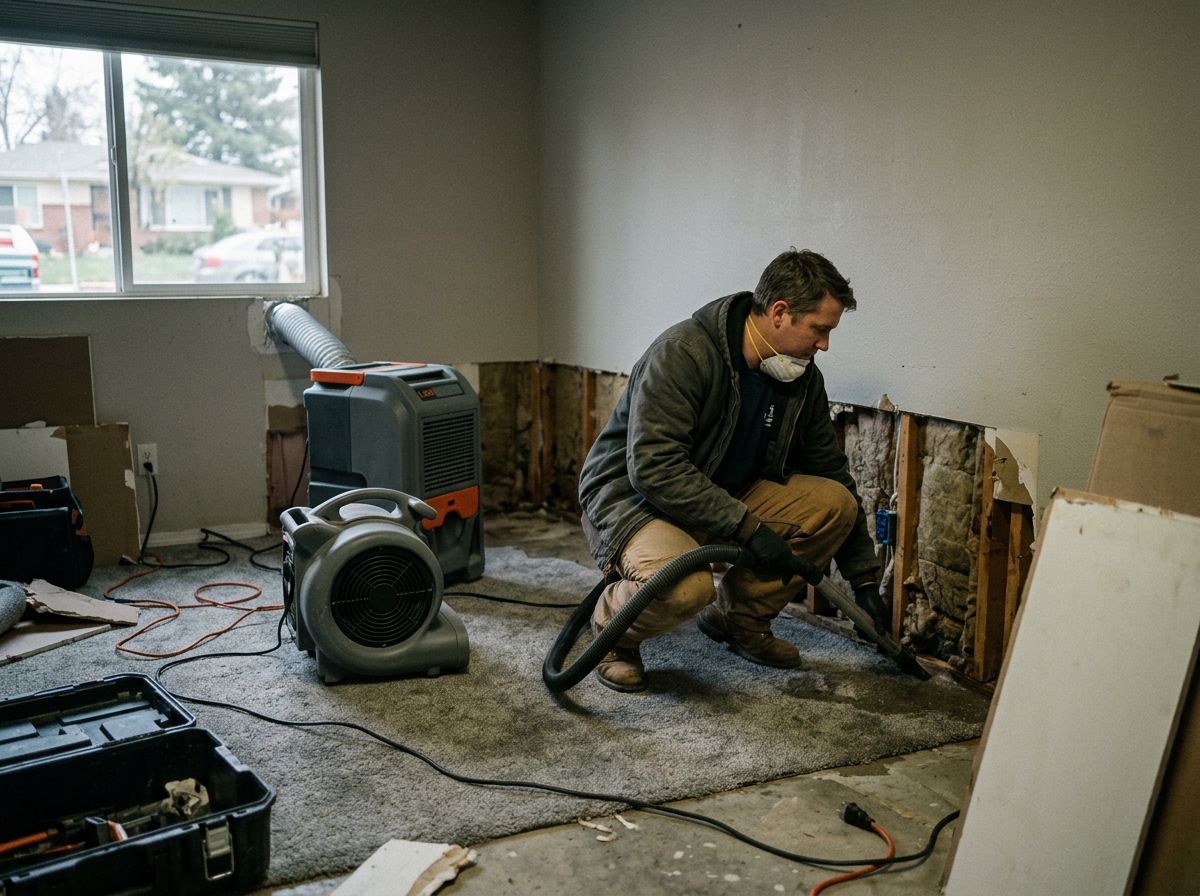
Burst pipes in Denver often release Category 1 clean water that quickly becomes Category 2 or 3 once it contacts flooring or drywall. Immediate extraction prevents saturation of subfloors and wall cavities where low humidity lets surfaces dry while interiors stay wet. Technicians begin with containment to limit spread, then use truck-mounted extraction units followed by air movers and dehumidifiers calibrated for 5,280-foot elevation and 15 inches of annual precipitation. Moisture meters track progress until drywall and framing reach documented dry standards.
Salvage decisions hinge on material and exposure time. Hardwood floors and cabinets can sometimes be saved if dried within 48 hours, but carpet pad, insulation, and baseboard usually require removal. In pre-war brick bungalows in Capitol Hill and Baker, plaster walls often hide voids that must be opened for airflow. Spring melt or frozen-pipe events in crawl spaces and exterior walls commonly show damage only after thawing, so visual inspection alone misses the full scope.
Safety steps include shutting off water at the main, isolating electrical circuits near standing water, and ventilating spaces where swamp-cooler leaks have introduced contaminants. Documentation for insurance includes dated photos, moisture logs, and a written scope that notes affected square footage and materials removed. These records support claims without delay because Denver insurers expect proof that hidden moisture was addressed before mould risk rises.
Drying targets remain consistent: relative humidity below 50 percent and moisture content matching unaffected reference materials. Follow-up visits verify that expansive bentonite clay soils have not caused additional foundation movement after the water event.
Technician insight
In Denver the thing that catches most people out with burst pipe water damage is how fast low humidity makes drywall feel dry while the studs and subfloor behind it stay wet, especially in pre-war homes without drain tile in Capitol Hill or Highlands where bentonite clay already stresses the foundation.
Frozen Pipe Burst in Englewood Ranch
A supply line in an unheated garage thawed and released water under the slab. Extraction pulled water from the crawl space and wall cavities, then drying equipment ran for four days until moisture readings matched reference materials. The homeowner received a full set of daily logs for the insurance adjuster.
Burst Pipe Water Damage Services We Offer
✓Emergency Pipe Burst Extraction
Truck-mounted pumps remove standing water from basements and crawl spaces before it migrates into wall cavities or subfloors.
✓Moisture Mapping and Monitoring
Infrared imaging and pin meters locate hidden saturation in framing and under finished floors common in 1950s ranches.
✓Selective Demolition and Removal
Cut out saturated drywall, carpet, and insulation while preserving salvageable hardwood and cabinetry where possible.
✓Structural Drying for Crawl Spaces
Targeted drying in unheated crawl spaces and garages where frozen pipes typically fail during thaw cycles.
✓Post-Event Documentation Package
Daily moisture logs and photo records formatted for insurance claims on older brick and stone foundations.
Burst Pipe Water Damage Cost in Denver, CO
| Service | Typical Range | What Affects It |
|---|---|---|
| Initial extraction visit | $450–$900 | Depends on volume of water and number of rooms |
| Daily drying equipment | $150–$350 | Per day; higher in multi-level homes or crawl spaces |
| Moisture mapping and monitoring | $200–$400 | Includes infrared scans and daily readings |
| Selective demolition | $300–$800 | Based on linear feet of wall or flooring removed |
Ranges are typical for Denver, CO and confirmed with an exact written quote before any work starts.
How it works
- 1
Secure The Source
Shut off water and isolate power in affected zones to stop further release.
- 2
Extract Standing Water
Remove bulk water from floors and cavities using extraction equipment suited to Denver's low-humidity conditions.
- 3
Map Hidden Moisture
Scan walls, subfloors, and framing to identify areas still wet despite dry surfaces.
- 4
Dry And Verify
Run drying equipment and recheck readings until materials reach documented dry standards.
- 5
Document For Claim
Compile logs and photos that show the full extent of work performed.
Pricing
Pricing varies with water volume, affected square footage, and whether hidden cavities in older homes require additional demolition.