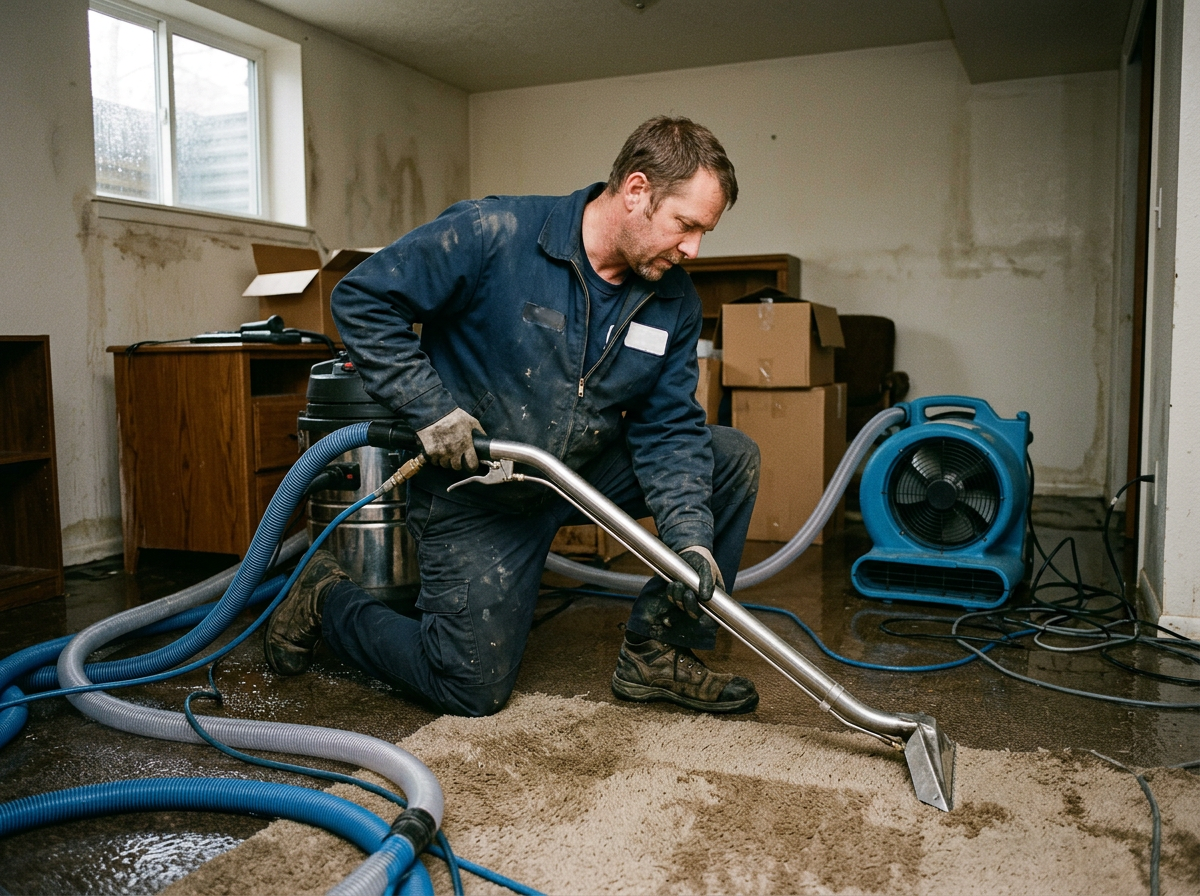
Emergency water removal in Denver begins with classifying the water as clean, gray or black to determine containment and disposal steps. Clean water from supply lines still requires fast extraction because low annual rainfall and 5,280-foot elevation let surfaces dry while framing and subfloors remain wet. Gray water from swamp coolers or washing machines needs antimicrobial treatment; black water from sewage or ground intrusion demands full PPE and separate waste handling. Technicians use submersible pumps followed by truck-mounted vacuums to pull water from finished surfaces, then open wall cavities in pre-war brick bungalows common in Capitol Hill and Highlands where no drain tile exists.
Moisture metering with pin and pinless meters tracks hidden saturation in joists and drywall. Drying targets stay below 12 percent moisture content in wood and 1 percent in gypsum to stay ahead of mold growth, which can begin within 48 hours even when ambient humidity is low. Salvageable materials include solid hardwood floors that can be dried in place; carpet padding, saturated insulation and drywall below the water line must be cut out. In 1950s ranches in Wheat Ridge and Arvada, technicians often remove base cabinets to reach wet particleboard. Safety protocols include GFCI protection on all equipment and ventilation checks when swamp-cooler leaks introduce electrical hazards.
Documentation for insurance includes daily moisture logs, before-and-after photos, and a drying timeline that notes equipment placement and readings. Claims adjusters in Denver want proof that extraction prevented secondary damage from expansive bentonite clay pushing on foundations during March and April melt. Technicians photograph affected zones in garages and exterior walls where frozen-pipe bursts appear only after thaw. This record supports coverage for both the initial event and the required demolition work.
Technician insight
In Denver, the thing that catches most people out with Emergency Water Removal is how our low humidity fools homeowners into thinking everything is dry while bentonite clay under Capitol Hill and Baker foundations keeps pushing moisture back into wall cavities for days after extraction.
Highlands Bungalow Swamp Cooler Leak
A roof-mounted swamp cooler float valve stuck during spring startup and sent water through the finished ceiling into the kitchen and adjacent bedroom. Extraction reached the ceiling joists and wall tops; affected drywall and insulation were removed the same day. Drying equipment ran for four days until readings dropped below target levels, allowing the homeowner to proceed with repairs without mold growth.
Emergency Water Removal Services We Offer
✓Burst Pipe Extraction
Removes water from walls and floors after supply-line or heating-pipe failures common in unheated crawl spaces of older Denver homes.
✓Swamp Cooler Leak Extraction
Extracts water from ceilings and attics when float valves stick during spring startup or autumn shutdown of roof-mounted evaporative coolers.
✓Spring Melt Basement Pumping
Handles groundwater entering basements when melt runs off still-frozen soil, especially in neighborhoods with bentonite clay.
✓Crawl Space Water Removal
Drains standing water from crawl spaces under 1950s-70s ranches in Englewood and Arvada where vapor barriers are often missing.
✓Garage and Exterior Wall Drying
Targets water that enters through foundation cracks or from frozen-pipe bursts in unheated garages and exterior walls.
Emergency Water Removal Cost in Denver, CO
| Service | Typical Range | What Affects It |
|---|---|---|
| Initial Extraction Visit | $350–$750 | Varies by water depth and number of rooms |
| Crawl Space Or Basement Pump-Out | $400–$900 | Higher when access is limited or clay soil slows drainage |
| Ceiling Or Attic Extraction | $300–$650 | Swamp-cooler leaks often require scaffolding |
| Daily Drying Equipment | $150–$350 per day | Number of air movers and dehumidifiers required |
| Moisture Documentation Package | $100–$200 | Includes logs and photos for insurance |
Ranges are typical for Denver, CO and confirmed with an exact written quote before any work starts.
How it works
- 1
On-Site Assessment
Technician inspects water source, classifies category, and maps affected materials in the specific Denver construction type.
- 2
Water Extraction
Submersible pumps and extraction wands remove bulk water from floors, cavities and ceilings.
- 3
Demolition And Containment
Wet drywall, insulation and padding are removed; containment barriers are set for gray or black water.
- 4
Drying And Monitoring
Air movers, dehumidifiers and moisture meters run until readings meet drying targets.
- 5
Documentation Handover
Daily logs and photos are compiled for the insurance claim.
Pricing
Upfront assessment with written scope before work begins; final cost depends on water volume, access and materials removed.