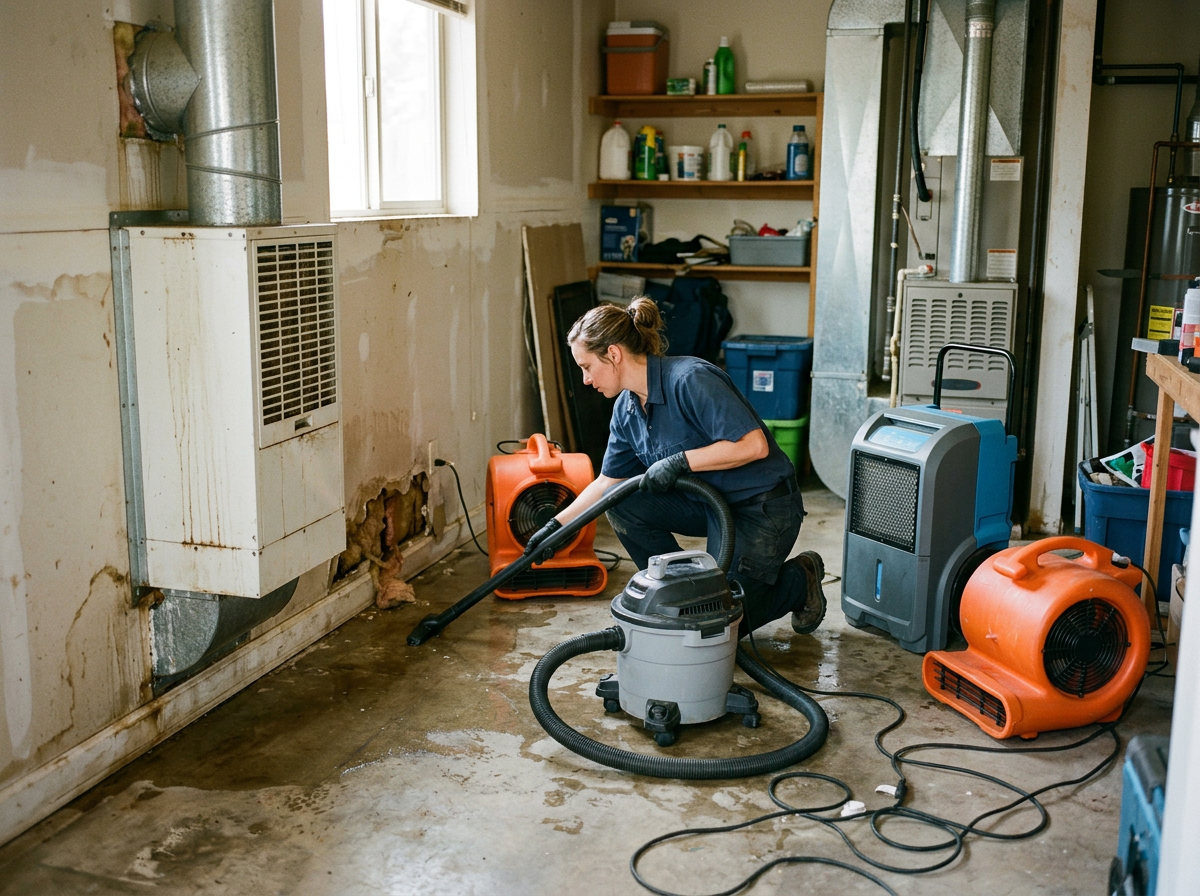
Swamp cooler leaks in Denver typically involve Category 1 or 2 water from supply lines or float valves that migrate through finished ceilings in older brick bungalows. Category 1 water requires immediate extraction to prevent migration into wall cavities, while Category 2 gray water from degraded lines demands antimicrobial treatment before drying begins. Low annual precipitation and 15 inches of rain mean humidity drops quickly, so surfaces can test dry while subfloors and joists retain moisture that feeds mold within 48 hours.
Extraction starts with containment to protect unaffected rooms, followed by removal of standing water using truck-mounted units suited for Denver's multi-story homes in Highlands or Washington Park. Technicians then deploy air movers and dehumidifiers calibrated for the semi-arid climate where rapid surface drying masks deeper saturation. Moisture meters track progress in cavities until readings reach ambient levels, usually 10-12 percent in local lumber.
Salvageable materials include intact drywall sections under 18 inches of saturation if no swelling has occurred, while saturated insulation, ceiling tiles, and particleboard must be cut out to allow proper drying. Safety protocols include checking for electrical hazards near metal swamp cooler housings and ventilating spaces where mold spores may already be present. Documentation for claims requires pre- and post-drying photos, meter logs, and a scope of affected square footage rather than estimates alone.
The 24-hour availability supports spring startup and autumn shutdown calls when valve failures peak. Homeowners should avoid running fans that spread spores until extraction is complete and should document any visible staining or dripping before cleanup begins.
Technician insight
In Denver the thing that catches most people out with Swamp Cooler Leak Cleanup is how bentonite clay around older foundations in Baker and Englewood swells during spring melt and pushes water higher into walls exactly when a float valve fails at startup, so the leak often looks like foundation movement until we meter the attic.
Highlands Bungalow Ceiling Leak
A swamp cooler supply line cracked at spring startup and water tracked through the finished ceiling of a pre-war brick home. Meters showed 22 percent moisture in joists behind drywall that felt dry to the touch. Extraction and targeted removal of saturated sections allowed full drying within four days before reconstruction.
Swamp Cooler Leak Cleanup Services We Offer
✓Float Valve Failure Extraction
Removes water from stuck float valves that overflow during seasonal startup and channels it away before it reaches finished ceilings.
✓Supply Line Leak Cleanup
Extracts water from cracked or corroded supply lines feeding roof-mounted coolers and dries the resulting attic and ceiling damage.
✓Ceiling Water Damage Restoration
Cuts out saturated drywall and restores ceilings in pre-war homes where swamp cooler leaks have migrated through plaster and lathe.
✓Attic Moisture Removal
Targets hidden saturation in attics above 1950s ranches where low humidity hides moisture until mold appears weeks later.
✓Spring Startup Leak Mitigation
Addresses leaks triggered when float valves and lines are first pressurized after winter shutdown in Denver's older housing stock.
Swamp Cooler Leak Cleanup Cost in Denver, CO
| Service | Typical Range | What Affects It |
|---|---|---|
| Initial Extraction and Assessment | $300–$650 | Higher when attic access requires ladder work or multiple rooms are affected |
| Drying Equipment Rental per Day | $150–$350 | Varies with number of air movers needed in expansive ranch layouts |
| Saturated Material Removal | $400–$900 | Increases with plaster versus drywall and height of ceilings |
| Post-Drying Moisture Verification | $150–$300 | Includes final meter readings and claim photos |
Ranges are typical for Denver, CO and confirmed with an exact written quote before any work starts.
How it works
- 1
On-Site Assessment
Technicians inspect the swamp cooler, trace leak paths through ceilings, and use meters to locate hidden moisture in cavities.
- 2
Water Extraction
Standing water is removed with specialized equipment while protecting unaffected areas in multi-level Denver homes.
- 3
Drying and Monitoring
Air movers and dehumidifiers run until moisture readings reach safe ambient levels in framing and subfloors.
- 4
Affected Material Removal
Uns salvageable sections are cut out and the area is prepared for reconstruction while documentation is compiled.
- 5
Final Verification
Post-drying meter checks confirm the space is dry and ready for repairs or insurance submission.
Pricing
Cost depends on access difficulty, volume of hidden moisture, and whether materials must be removed from older Capitol Hill or Highlands homes.