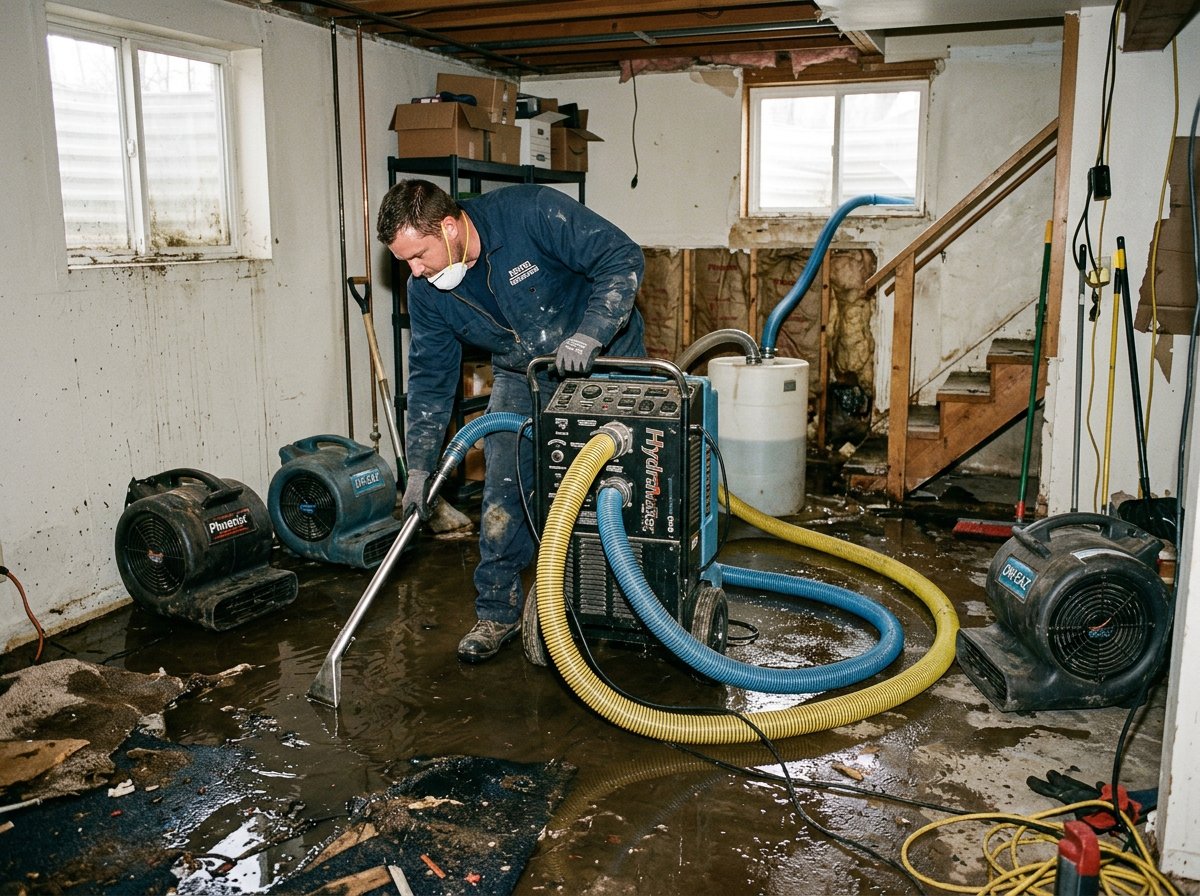
Morrison sits in the foothills with well water and septic systems on steep lots where driveways often narrow to single lanes. Water extraction crews must stage equipment at the road and run longer hoses uphill while watching for root intrusion into older laterals. Freeze exposure lasts longer here than in the metro flatlands, so pipe bursts inside crawl spaces or along exposed lines happen more often once temperatures drop.
Bear Creek runs right through town and raises the chance of groundwater intrusion after heavy rain. Extraction work frequently involves separating clean water from potential septic cross-contamination, requiring careful containment on sloped terrain. Denver-based teams face forty-minute drives each way, so same-day response depends on having trucks already staged for mountain calls.
Homeowners along Highway 8 and near Mount Morrison commonly report water migrating under foundations built on fractured rock. Extraction here focuses on pulling standing water before it reaches septic tanks or well heads, followed by targeted drying of basements that sit partially below grade.
Around Morrison
We regularly work near:
- 📍Red Rocks Amphitheatre
- 📍Dinosaur Ridge
- 📍Bear Creek
- 📍Mount Morrison
- 📍Colorado Highway 8
- 📍Matthews-Winters Park
Water Extraction in Morrison — Local Notes
- •Steep single-lane driveways require hose extensions and smaller portable units rather than full-size trucks parked at the house.
- •Septic systems sit close to extraction zones, so crews isolate clean water lines to avoid pulling effluent into recovery equipment.
- •Extended freeze cycles on north-facing slopes cause repeated pipe bursts in crawl spaces and exterior risers.
- •Longer round-trip times from Denver mean on-site crews carry extra fuel, pumps and containment for same-day completion.